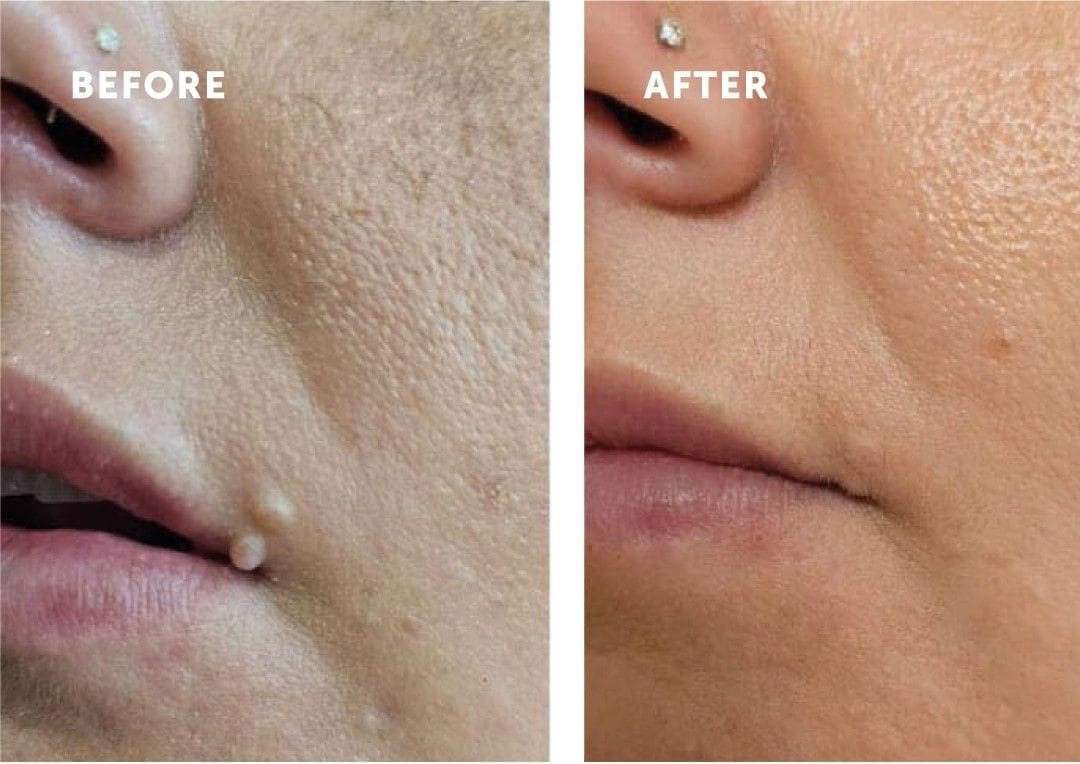
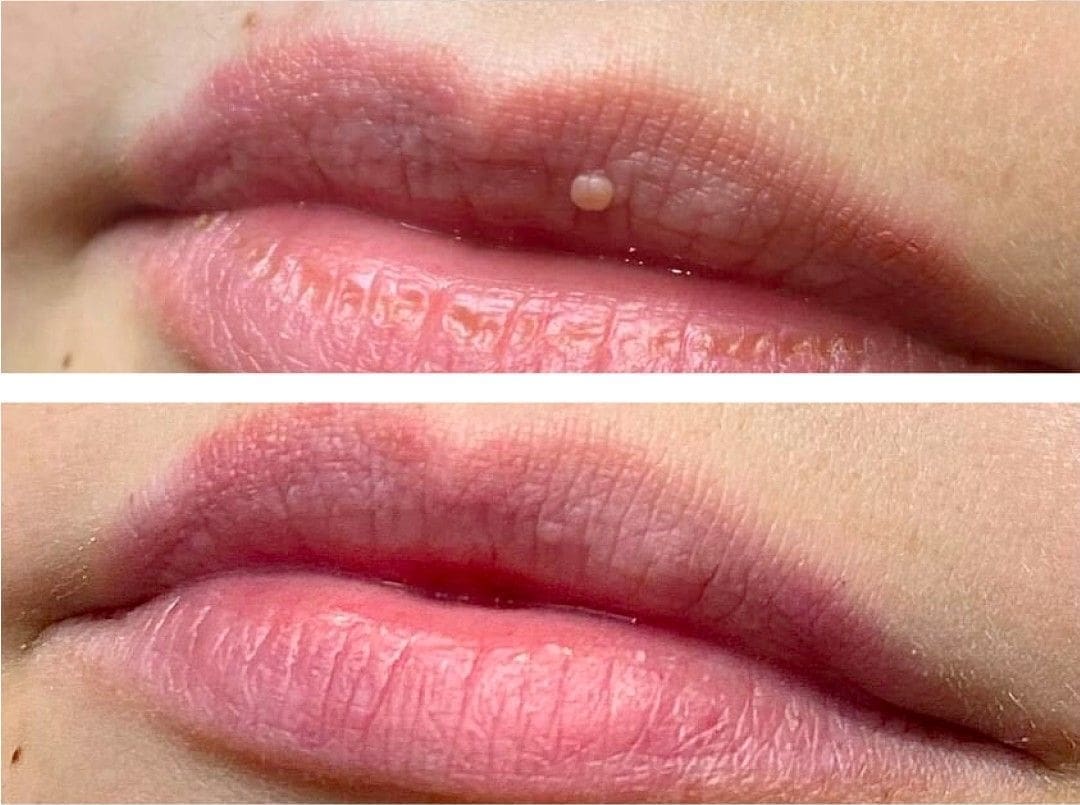
Is CryoPen Safe?

Dr Hasaneen Al Janabi MBBS MRCS (ENT) - Dr Hass Clinic Founder & Medical Director

Published by Dr Hasaneen

Published date 21.08.26

Yes, CryoPen is safe.

It is built on cryosurgery, a technique that has been used in dermatology and general practice for more than four decades to treat benign skin lesions such as skin tags, warts, and milia. It is FDA-cleared, CE-marked, and one of the best-established, most extensively studied treatment technologies in outpatient dermatology.

Here is what the published clinical evidence actually says, what genuine risks exist, and what determines whether your own treatment is a safe one.

Is CryoPen Safe - At a Glance - Dr Hass Clinic

What is CryoPen, in simple terms?

CryoPen delivers a precise, high-pressure jet of nitrous oxide to a targeted skin lesion for a matter of seconds, freezing the tissue to around minus 89°C.

This causes the cells within the lesion to form ice crystals and rupture, destroying the unwanted tissue while sparing the surrounding healthy skin. The body then clears the damaged tissue naturally over one to two weeks as part of a normal healing process.

How CryoPen removes a Skin Tag - Dr Hass Clinic

What does the clinical evidence say?

Cryosurgery, the technique behind CryoPen, is one of the most established treatment modalities in outpatient dermatology. Two independent, peer-reviewed sources summarise the evidence clearly:

In Vivo / PMC (2025)
A comprehensive review of cutaneous cryosurgery across benign, premalignant, and malignant lesions found it offers distinct advantages over many established treatments due to its safety, efficiency, feasibility, and cost-effectiveness, with strong adaptability across a broad range of patient populations.
Read the full study here →

American Academy of Family Physicians (2020)
A structured clinical review, drawing on PubMed, the Cochrane database, and other major evidence sources, described cutaneous cryosurgery as valued specifically for its safety, effectiveness, low cost, ease of use, lack of need for injectable anaesthetic, and good cosmetic results.
Read the full study here →

The conclusion across both sources is consistent: cryosurgery is a genuinely well-evidenced, low-risk treatment, not a newer or less-tested alternative, but one of the most established techniques in dermatology.

Side effects and risks, at a glance

Common:

  • Redness and mild swelling, appearing immediately, similar to a mild bee sting
  • Blistering, forming within hours and drying into a scab within 3 to 5 days
  • Scabbing, which falls away naturally within 1 to 2 weeks
  • Temporary pigment change, fading over several weeks to a few months

Uncommon:

  • Infection, rare with proper technique and aftercare
  • Permanent pigment change, more of a consideration in darker skin tones
  • Under or over-treatment of a lesion, linked directly to practitioner experience

Rare:

  • Nerve sensitivity changes, occasionally where a lesion sits close to a superficial nerve

The common effects above are a normal, expected part of healing, not a sign anything has gone wrong. For a full breakdown of what to expect at each stage, read our CryoPen recovery and aftercare guide. For more detail on the scarring question specifically, read our guide on does CryoPen leave a scar.

The consistent finding across the clinical literature is that the overwhelming majority of complications relate to technique and practitioner skill, not the underlying cryosurgery method itself.

CryoPen Before and Afer - Eyes - Dr Hass Clinic

Who should exercise caution or seek advice first?

  • Very dark skin tones, more prone to temporary pigment changes, may benefit from an adjusted technique
  • Poor circulation or certain vascular conditions, worth flagging at consultation
  • Any lesion without a clear benign diagnosis, which should always be properly assessed first, never assumed
  • Pregnancy, where treatment is generally deferred as a precaution
Cryopen Before and After Lips - Dr Hass Clinic

Why practitioner training is the real safety variable

The single biggest factor in how safe your CryoPen treatment is comes down to who is holding the device, not the device itself.

Correct diagnosis of the lesion, accurate freeze duration, and appropriate technique for the specific skin type and location are what genuinely prevent the rare complications outlined above. This is precisely why CryoPen should always be performed by a properly trained medical professional, not an unregulated provider.

The bottom line

CryoPen is safe.

It is built on a cryosurgery technique with more than four decades of documented clinical use, strong published evidence, and a well-characterised, low-risk safety profile. Side effects are common but mild and self-resolving.

Serious complications are rare and are overwhelmingly linked to practitioner skill rather than the treatment itself, which makes choosing a properly trained, medically qualified provider the single most important safety decision you will make.

Consultation 2 at Dr Hass Clinic

CryoPen at Dr Hass Clinic

At Dr Hass Clinic, every CryoPen treatment is performed personally by Dr Hasaneen Al-Janabi, a GMC-registered doctor and Member of the Royal College of Surgeons, using FDA-cleared and CE-marked technology.

Every lesion is properly assessed before treatment, with the approach calibrated to your specific skin type, lesion, and location.

Latest News

Don’t Take Our Word For it…

Our clients’ satisfaction is at the heart of everything we do. We take immense pride in helping individuals enhance their natural beauty and boost their confidence.

Dr Hass Surgeon-led Aesthetic Clinic Mayfair Waiting Area Dr Hass Clinic - Luxury Aesthetic Clinic Mayfair

Our Clinic

Your Sanctuary

Welcome to our clinic, where innovation, expertise, and personalised care merge to redefine your natural beauty. We specialise in providing a wide range of non-invasive treatments that deliver remarkable results without the need for surgery.

Call us — 020 8168 8178

or