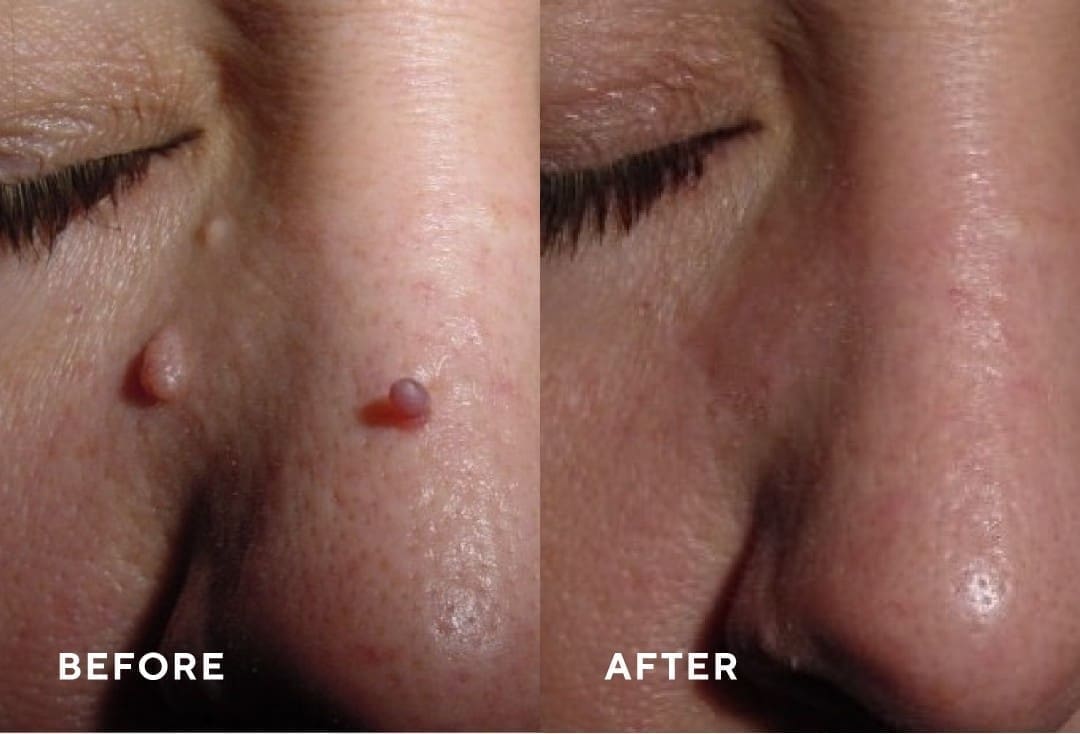
Does CryoPen Leave a Scar?

Dr Hasaneen Al Janabi MBBS MRCS (ENT) - Dr Hass Clinic Founder & Medical Director

Published by Dr Hasaneen

Published date 19.08.26

In the large majority of cases, no. CryoPen does not leave a scar.

This is one of the most common questions before treatment, and a completely understandable one, freezing skin sounds like it should be more dramatic than it actually is. The reality is far more reassuring than the mental image most people have.

Here is exactly what happens to the skin during and after treatment, why scarring is genuinely uncommon, and the specific factors that do influence the outcome.

Why the fear feels bigger than the reality

It is a completely reasonable worry. The idea of freezing skin tissue to minus 89°C sounds severe, and most of us associate freezing injuries, like frostbite, with lasting damage. But CryoPen works in a fundamentally different, far more controlled way. The freeze is precisely targeted, extremely brief, typically just a few seconds, and calibrated specifically to affect only the lesion itself, not the healthy tissue surrounding it.

This precision is the entire reason cryotherapy has been used safely in dermatology and general practice for decades, on delicate areas including the eyelids and face, where the margin for error genuinely matters.

What actually happens to the skin

Understanding the healing process is what makes the low scarring risk make sense.

  • During treatment, the targeted tissue freezes and turns white for a few seconds
  • Within hours, the area thaws, flushes red, and may form a small raised weal, similar to a mild bee sting
  • Over the following days, a blister may develop before drying into a scab
  • Within one to two weeks, the scab naturally separates and falls away on its own
  • Underneath, fresh, healthy skin is revealed, which gradually blends back to your natural skin tone over the following weeks

This is a controlled, superficial healing process, not tissue destruction that reaches deep enough to cause structural scarring. True scarring occurs when damage extends into the deeper layers of the skin. CryoPen is specifically calibrated to affect only the lesion and the most superficial skin layers above it, which is precisely why the risk of a true scar is low.

For a complete breakdown of this healing timeline and how to care for the area at each stage, read our CryoPen recovery and aftercare guide.

cryopen-recovery-aftercare-timeline-dr-hass-clinic

What genuinely does affect the outcome

While true scarring is uncommon, a few factors do influence how the skin looks during and after healing, and being aware of them helps set realistic expectations.

Picking or disturbing the scab. This is, by far, the single biggest controllable factor in whether skin heals cleanly. Removing a scab before the skin underneath is ready interrupts the natural healing process and is the most common preventable cause of a less clean result. Left alone, the scab will fall away exactly when the skin beneath it is ready.

Temporary changes in skin colour. This is far more common than true scarring, and it is important to understand the difference. The treated area can appear lighter or darker than the surrounding skin for a period after healing. This is a temporary pigment change, not a scar, and it typically fades over several weeks to a few months as the skin’s normal pigment production settles.

Skin tone. Patients with darker skin tones are somewhat more prone to temporary pigment changes after cryotherapy. This is well understood clinically, and an experienced practitioner will often adjust the freeze technique, sometimes using shorter, more measured freezing cycles, specifically to reduce this risk for darker skin.

Lesion size and depth. Larger or deeper lesions naturally involve a slightly more significant healing process than very small, superficial ones. This does not necessarily mean a higher scarring risk, but it can mean a longer healing window before the final result is fully settled.

Practitioner skill and calibration. The freeze duration and depth need to be judged accurately for the specific lesion being treated. This is precisely why CryoPen should always be performed by a properly trained practitioner rather than an unregulated or inexperienced provider.

CryoPen Before and After Body - Dr Hass Clinic

How to give yourself the best chance of scar-free healing

  • Leave the scab completely alone and let it fall away naturally in its own time
  • Keep the area clean with gentle washing rather than harsh products
  • Protect the area with a plaster if it is somewhere prone to knocks or friction during healing
  • Apply SPF to the area once healed and continue until the skin tone has fully settled, since UV exposure can prolong any temporary pigment change
  • Follow the specific aftercare guidance given for your lesion type and location
CryoPen Hands Before and After - Dr Hass Clinic

Is CryoPen safer than other removal methods for scarring?

CryoPen’s precision is genuinely one of its biggest advantages over other removal approaches.

Because the nitrous oxide jet is targeted with millimetre accuracy, only the lesion itself is affected, sparing the healthy surrounding tissue in a way that more invasive removal methods, such as surgical excision, cannot always guarantee. This precision is exactly why CryoPen is considered suitable for delicate, highly visible areas including the face and around the eyes. For more detail on how the treatment is delivered and its overall safety profile, read our guide on is CryoPen safe.

If you are specifically considering treatment for skin tags, our guide on CryoPen for skin tags covers what to expect by treatment area, including the face, eyes, lips, body, hands, and feet.

CryoPen Before and After - Feet - Dr Hass Clinic

The bottom line

CryoPen very rarely causes true scarring.

What you are far more likely to notice is a temporary change in skin tone during healing, which is not the same thing as a scar and typically resolves on its own within a few weeks to months. The single most important thing you can do to support a clean result is to leave the healing scab alone and follow the aftercare guidance you are given.

CryoPen at Dr Hass Clinic

At Dr Hass Clinic, every CryoPen treatment is performed personally by Dr Hasaneen Al-Janabi, a GMC-registered doctor and Member of the Royal College of Surgeons, using FDA-cleared and CE-marked technology.

Each session is calibrated specifically to your lesion type, size, and skin tone, with clear aftercare guidance provided to support the cleanest possible healing.

Latest News

Don’t Take Our Word For it…

Our clients’ satisfaction is at the heart of everything we do. We take immense pride in helping individuals enhance their natural beauty and boost their confidence.

Dr Hass Surgeon-led Aesthetic Clinic Mayfair Waiting Area Dr Hass Clinic - Luxury Aesthetic Clinic Mayfair

Our Clinic

Your Sanctuary

Welcome to our clinic, where innovation, expertise, and personalised care merge to redefine your natural beauty. We specialise in providing a wide range of non-invasive treatments that deliver remarkable results without the need for surgery.

Call us — 020 8168 8178

or