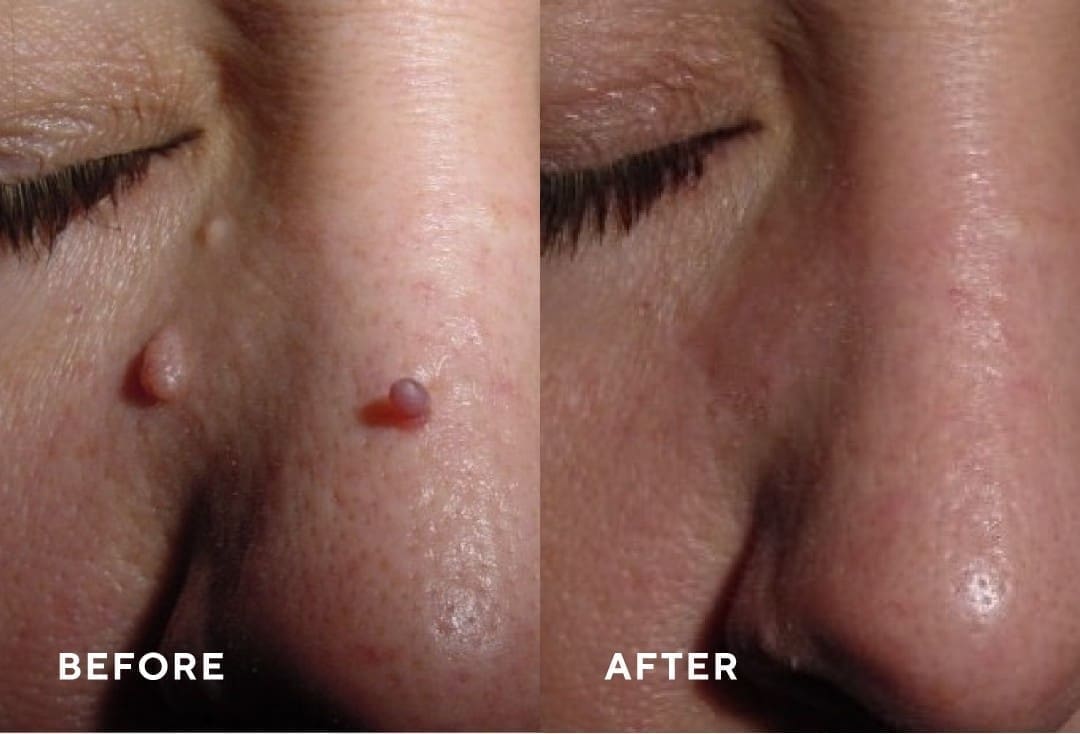
While true scarring is uncommon, a few factors do influence how the skin looks during and after healing, and being aware of them helps set realistic expectations.
Picking or disturbing the scab. This is, by far, the single biggest controllable factor in whether skin heals cleanly. Removing a scab before the skin underneath is ready interrupts the natural healing process and is the most common preventable cause of a less clean result. Left alone, the scab will fall away exactly when the skin beneath it is ready.
Temporary changes in skin colour. This is far more common than true scarring, and it is important to understand the difference. The treated area can appear lighter or darker than the surrounding skin for a period after healing. This is a temporary pigment change, not a scar, and it typically fades over several weeks to a few months as the skin’s normal pigment production settles.
Skin tone. Patients with darker skin tones are somewhat more prone to temporary pigment changes after cryotherapy. This is well understood clinically, and an experienced practitioner will often adjust the freeze technique, sometimes using shorter, more measured freezing cycles, specifically to reduce this risk for darker skin.
Lesion size and depth. Larger or deeper lesions naturally involve a slightly more significant healing process than very small, superficial ones. This does not necessarily mean a higher scarring risk, but it can mean a longer healing window before the final result is fully settled.
Practitioner skill and calibration. The freeze duration and depth need to be judged accurately for the specific lesion being treated. This is precisely why CryoPen should always be performed by a properly trained practitioner rather than an unregulated or inexperienced provider.