Are Anti-Wrinkle Injections Safe?

Dr Hasaneen Al Janabi MBBS MRCS (ENT) - Dr Hass Clinic Founder & Medical Director

Published by Dr Hasaneen

Published date 12.05.26

Introduction

Anti-wrinkle injections are one of the most commonly performed aesthetic treatments in the world, yet the same question comes up time and time again:

“Are anti-wrinkle injections actually safe?”

It is a fair question. The idea of injecting a neurotoxin into the face can sound concerning without proper context.

In reality, when used in controlled medical doses, botulinum toxin type A (Botox®) has one of the most extensively studied safety profiles in modern aesthetic medicine. It has been used for decades not only cosmetically, but also in neurology, ophthalmology, and rehabilitation medicine.

This article breaks down the science, clinical evidence, real risks, and safety considerations, so you can make an informed, medically grounded decision.

Anti-Wrinkle Injections - Before and After Forehead - Dr Hass Clinic

What Are Anti-Wrinkle Injections?

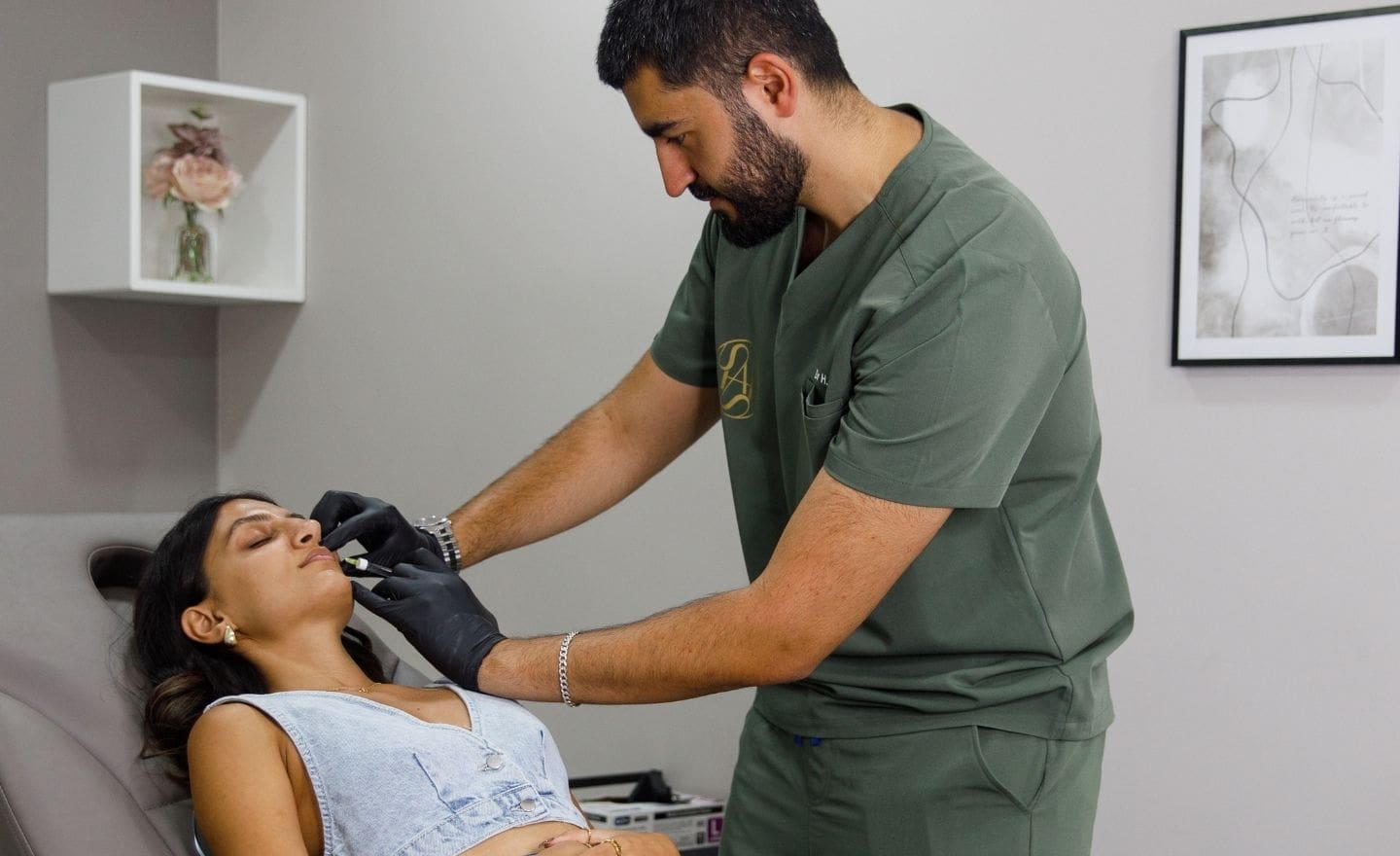
Anti-wrinkle injections use highly purified botulinum toxin type A to temporarily reduce muscle activity in targeted areas of the face.

By blocking nerve signals to specific muscles, the treatment:

  • Softens dynamic wrinkles such as frown lines and crow’s feet
  • Prevents repetitive folding of the skin
  • Allows the skin to appear smoother and more relaxed

The effect is localised, controlled, and temporary, typically lasting 3–4 months.

Importantly, the doses used in aesthetic medicine are extremely small and designed to affect only the treated muscles, not the body as a whole.

Anti Wrinkle Injections

Clinical Evidence: What the Research Actually Shows

Botulinum toxin is one of the most researched injectable treatments globally.

A systematic review of clinical studies, Safety of Botulinum Toxin A in Aesthetic Treatments, found that adverse effects were generally mild, temporary, and self-limiting. This makes it one of the most relevant sources for reassuring readers about the safety of cosmetic anti-wrinkle injections.

The Cochrane review, Botulinum toxin type A for facial wrinkles, also supports efficacy for facial lines while noting that side effects are usually limited and technique-related, rather than a sign that the treatment itself is unsafe.

For longer-term use, the review The whole truth about botulinum toxin – a review reports that repeated cosmetic treatments are generally well tolerated when performed appropriately, with no evidence of cumulative systemic toxicity in routine aesthetic use.

Taken together, these studies support a balanced clinical message: anti-wrinkle injections are considered safe for most patients when they are administered correctly, with the most important risks linked to technique, dosage, and patient selection.

Anti Wrinkle Injections

Why Anti-Wrinkle Injections Are Considered Safe

Several key characteristics contribute to the strong safety profile of botulinum toxin in aesthetic use.

First, the doses are extremely small compared to those used in medical treatments for conditions such as muscle spasticity.

Second, the effect is temporary and reversible, meaning muscle activity gradually returns over time.

Third, the product remains localised to the injection site when administered correctly.

Finally, the treatment is minimally invasive, with no incisions, no general anaesthetic, and minimal recovery time.

Together, these factors make anti-wrinkle injections one of the lowest-risk aesthetic procedures when performed correctly.

Understanding the Risks: What Can Actually Go Wrong

Although generally safe, anti-wrinkle injections are still a medical procedure and carry potential risks.

Most side effects are mild and short-lived.

Common and expected

  • Redness at injection sites
  • Mild swelling
  • Slight bruising
  • Temporary tenderness

These usually resolve within hours to a few days.

Less common

  • Headache
  • Temporary tightness or heaviness
  • Mild asymmetry during early settling

Rare but clinically recognised

  • Eyelid or brow ptosis (drooping)
  • Unintended muscle weakness
  • Product diffusion beyond the target area

These complications are almost always temporary and resolve as the toxin effect wears off.

Crucially, evidence shows that these risks are primarily linked to technique, dosing, and injector experience, rather than the product itself.

Risk–Benefit Analysis

From a medical perspective, anti-wrinkle injections offer a favourable balance between safety and effectiveness.

In practical terms, serious complications are rare, while benefits are predictable and well established.

For most suitable patients, this creates a low-risk, high-reward treatment profile.

The Most Important Safety Factor: Practitioner Expertise

The single most important variable in treatment safety is who performs the injections.

Botulinum toxin requires precise understanding of:

  • Facial anatomy
  • Muscle function and balance
  • Injection depth and placement
  • Appropriate dosing

Incorrect placement or excessive dosing can lead to unnatural results or temporary complications such as drooping or asymmetry.

Filler Consultation at Dr Hass Clinic

Why Choose Dr Hass Clinic

At Dr Hass Clinic, safety is built into every stage of treatment through a doctor-led, precision-based approach.

All anti-wrinkle injections are performed by Dr Hasaneen Al Janabi, a GMC-registered doctor and Member of the Royal College of Surgeons.

Our safety framework includes:

  • Detailed facial and muscle assessment
  • Individualised treatment planning
  • Conservative dosing to preserve natural expression
  • Use of premium, medical-grade botulinum toxin products
  • Ongoing follow-up and aftercare

With over 10,000 patients treated, the focus is always on delivering results that are natural, balanced, and medically safe.

Who Should Avoid Anti-Wrinkle Injections

While safe for most patients, treatment may not be appropriate for individuals who:

  • Are pregnant or breastfeeding
  • Have certain neuromuscular conditions
  • Have active skin infections at the treatment site
  • Have known hypersensitivity to botulinum toxin

A proper medical consultation is essential to determine suitability.

Frequently Asked Questions

Our patients often ask:

Is Botox safe long term?
Yes. Long-term studies show it remains safe when used at appropriate doses and intervals.

Does the toxin spread through the body?
No. In cosmetic use, it remains localised to the injection site.

What happens if I stop treatment?
Muscle activity gradually returns, and wrinkles reappear naturally.

Is Botox actually toxic?
It is a purified protein used in extremely small, controlled doses, making it safe in medical use.

Conclusion

Anti-wrinkle injections are a well-established, clinically proven treatment with a strong safety profile.

When performed by an experienced medical professional using correct technique and dosing, risks are minimal and results are predictable.

Ultimately, the safety of the treatment depends far less on the product itself, and far more on clinical expertise, precision, and patient selection.

Book a consultation at Dr Hass Clinic to receive personalised advice and expert guidance on whether anti-wrinkle injections are right for you.

Latest News

Don’t Take Our Word For it…

Our clients’ satisfaction is at the heart of everything we do. We take immense pride in helping individuals enhance their natural beauty and boost their confidence.

Dr Hass Surgeon-led Aesthetic Clinic Mayfair Waiting Area Dr Hass Clinic - Luxury Aesthetic Clinic Mayfair

Our Clinic

Your Sanctuary

Welcome to our clinic, where innovation, expertise, and personalised care merge to redefine your natural beauty. We specialise in providing a wide range of non-invasive treatments that deliver remarkable results without the need for surgery.

Call us — 020 8168 8178

or