Is Laser Liposuction Safe?

Dr Hasaneen Al Janabi MBBS MRCS (ENT) - Dr Hass Clinic Founder & Medical Director

Published by Dr Hasaneen

Published date 3.08.26

Yes, laser liposuction has a strong safety record, and the published evidence actually points to fewer complications than traditional liposuction, not more.

That might come as a surprise if you have only heard liposuction discussed in general terms, without the distinction between older techniques and the laser-assisted approach used today.

Here is how laser liposuction actually works, what the research says about its safety compared to traditional methods, and what genuinely determines whether your own treatment is a safe one.

Endolift Treatment in London - Dr Hass Clinic

How does laser liposuction actually work?

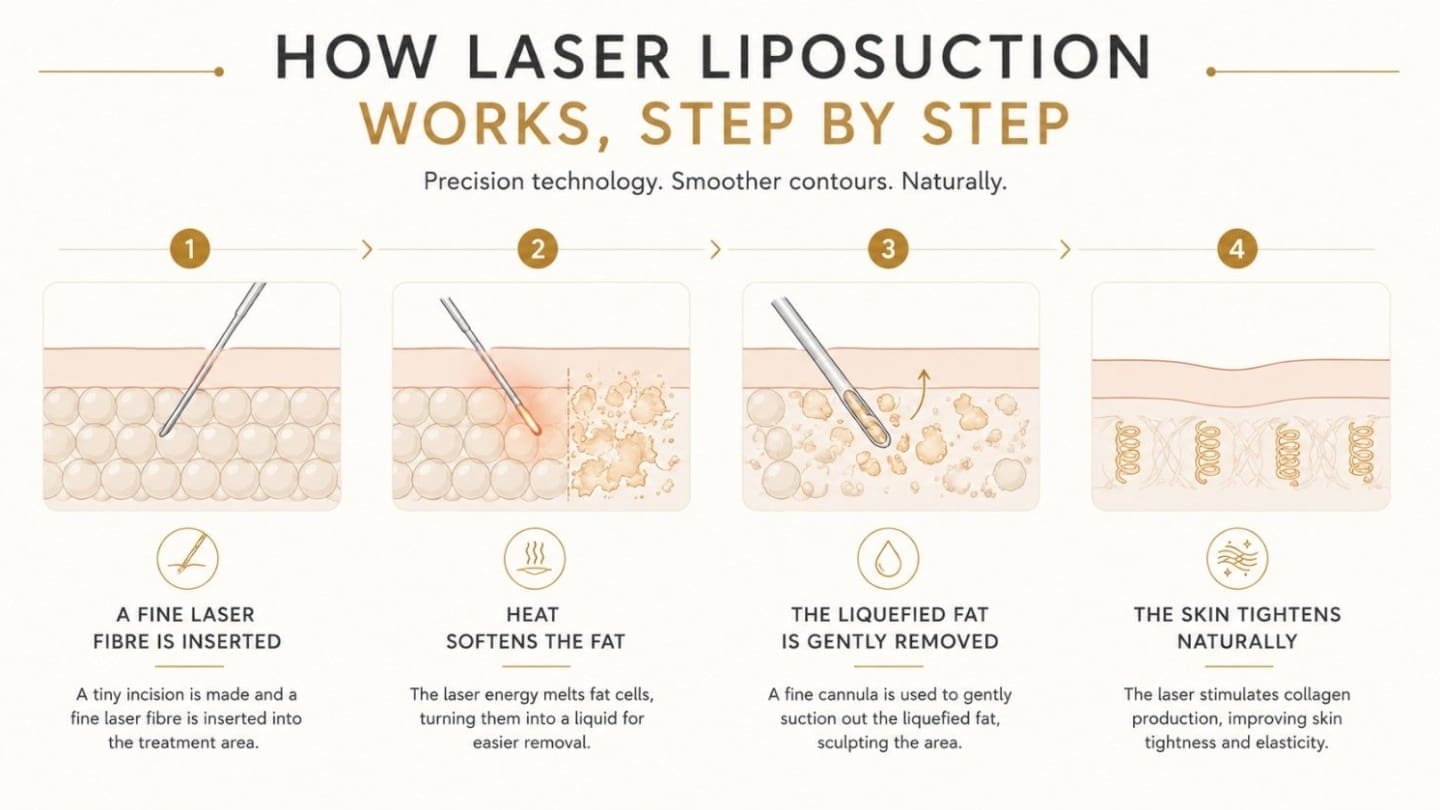
Let’s break this down step by step, because understanding the mechanism is what makes the safety picture make sense.

Step one: a very fine laser fibre is inserted beneath the skin. This is done through a tiny incision, smaller than the ones used in traditional liposuction. There is no large cut, just a small entry point for the fibre to pass through.

Step two: the laser gently heats the fat cells beneath the skin. This heat causes the fat to soften and essentially turn from something solid into something closer to a liquid. Nothing is being cut or torn at this stage. The fat is simply being made easier to remove.

Step three: the now-liquefied fat is gently removed. Because the fat has already been softened by the laser, far less force or manipulation is needed to take it out compared with traditional liposuction, where the cannula has to physically break up solid fat as it goes.

Step four: the same heat also tightens the skin above it. As a welcome side effect, the warmth from the laser stimulates collagen in the surrounding skin, encouraging a subtle tightening in the treated area. This is something traditional liposuction alone does not offer.

This is exactly why laser liposuction tends to be gentler than older techniques. Less physical force during removal generally means less bleeding, less bruising, and a smoother recovery, which is reflected clearly in the research below.

How Laser Liposuction Works Step by Step - Dr Hass Clinic

What does the research actually say?

This is genuinely one of the better-studied questions in aesthetic surgery, and the findings are consistent and reassuring.

A systematic review published in Aesthetic Plastic Surgery compared complication rates between laser-assisted liposuction and traditional liposuction across the existing published literature. The findings were notable: laser-assisted liposuction showed the lowest overall complication rates of any technique studied, with rates for bleeding, infection, fluid build-up, thermal injury, and skin damage all sitting at a very low 0.13%. In plain terms, out of every technique compared, the laser-assisted approach came out on top for safety, not just comparable to traditional methods, but meaningfully better across almost every complication measured.

Read the full study here →

A separate, widely cited review published in the Journal of Drugs in Dermatology looked specifically at the safety record of liposuction performed under local anaesthesia, which includes many laser-assisted procedures, across data covering more than 100,000 treated body areas. The review found no cases of the serious complications sometimes associated with liposuction under general anaesthesia, including blood clots, organ perforation, or fatal reactions. The researchers concluded that this more modern, tumescent, locally anaesthetised approach carries a genuinely excellent safety profile compared with older, more invasive surgical liposuction performed under general anaesthesia.

Read the full study here →

Taken together, this research supports a clear and reassuring conclusion. Laser liposuction, particularly when performed under local anaesthesia rather than a general anaesthetic, is one of the safer approaches to fat removal available today.

Endolift Laser Full Face Before and After at Dr Hass Clinic London

What are the common, expected side effects?

Side effects after laser liposuction are normal and mostly mild. They are simply your body’s natural response to the treatment, not a sign that anything has gone wrong.

  • Swelling in the treated area, usually most noticeable in the first week and settling gradually over several weeks
  • Bruising, which tends to be lighter than with traditional liposuction thanks to the gentler removal process, fading within one to two weeks
  • Mild soreness or tenderness, similar to how you might feel after a tough workout, manageable with simple pain relief
  • Temporary numbness or altered sensation in the treated area, which typically resolves over several weeks as the nerves settle
  • Some fluid drainage from small incision points in the first day or two, which is expected and part of normal healing

What are the rare but more serious risks?

Serious complications are uncommon, and being aware of them is simply part of making a fully informed decision.

  • Infection at the treatment site, which is rare with proper sterile technique but requires prompt attention if it occurs
  • Thermal injury or burns to the skin, which is one of the few risks genuinely specific to the laser aspect of the treatment, and is directly linked to how carefully the laser energy is calibrated and monitored during the procedure
  • Fluid accumulation (seroma) beneath the skin, occasionally requiring simple drainage
  • Contour irregularities, where the treated area does not heal perfectly evenly, more likely with larger volumes or less experienced technique
  • Anaesthesia-related risks, which are considerably lower with local or tumescent anaesthesia than with a general anaesthetic

Almost all of these serious risks share one thing in common. They are far more closely linked to the skill and experience of the person performing the treatment than to the technology itself.

Why the surgeon matters more than the machine

The single biggest factor in how safe your laser liposuction experience will be is who is holding the laser, not the laser itself.

Correct calibration of laser energy, careful movement beneath the skin, and a thorough understanding of the body’s anatomy in the treated area are what genuinely prevent the rare complications outlined above. A properly trained surgeon monitors temperature and tissue response constantly throughout the procedure, adjusting in real time rather than following a fixed routine regardless of how your body is responding.

This is precisely why laser liposuction performed by an experienced, appropriately qualified surgeon carries such a strong safety profile in the published research, while poorly performed treatments, regardless of the technology used, carry meaningfully higher risk.

Endolift Full Face Rejuvenation Before and After Results - Dr Hass Clinic in London

Who should think twice about laser liposuction?

Laser liposuction is not right for everyone, and a proper consultation should always establish this honestly before treatment. It may not be suitable if you:

  • Are significantly overweight, since this is a body contouring treatment for stubborn, localised fat, not a weight loss solution
  • Have a bleeding disorder or are taking blood-thinning medication
  • Have an active infection or skin condition in the area to be treated
  • Are pregnant or breastfeeding
  • Have unrealistic expectations about the degree of change achievable in a single, minimally invasive session

Most patients require more than one session to achieve their desired result. To understand what that typically looks like, read our guide on how many sessions of laser liposuction you need.

What recovery genuinely looks like

One of the most consistent findings across the research is that recovery from laser liposuction tends to be gentler and quicker than from traditional liposuction, largely because less physical trauma is involved in removing fat that has already been softened by the laser.

Most patients return to light daily activity within a few days, though full recovery and final results typically take several weeks to become fully visible as residual swelling settles.

For a full breakdown of what to expect day by day, read our laser liposuction recovery and aftercare guide. If you are still weighing up laser liposuction against a more traditional approach, our guide on laser liposuction vs traditional liposuction sets out the key differences clearly.

The bottom line

Laser liposuction is a genuinely safe treatment, supported by published research showing complication rates as low as, or lower than, any other liposuction technique currently available.

The rare, more serious risks that do exist are overwhelmingly linked to practitioner skill and experience rather than the treatment itself. Choosing a properly qualified, experienced surgeon is, by some distance, the single most important safety decision you will make.

Consultation at Dr Hass Clinic

Laser liposuction at Dr Hass Clinic

At Dr Hass Clinic, laser liposuction is performed by Dr Hasaneen Al-Janabi, a GMC-registered surgeon and Member of the Royal College of Surgeons, using local anaesthesia rather than general anaesthetic wherever appropriate, in line with the safety advantages the research consistently points to. Every consultation includes a full, honest assessment of your suitability before any treatment is recommended.

Latest News

Don’t Take Our Word For it…

Our clients’ satisfaction is at the heart of everything we do. We take immense pride in helping individuals enhance their natural beauty and boost their confidence.

Dr Hass Surgeon-led Aesthetic Clinic Mayfair Waiting Area Dr Hass Clinic - Luxury Aesthetic Clinic Mayfair

Our Clinic

Your Sanctuary

Welcome to our clinic, where innovation, expertise, and personalised care merge to redefine your natural beauty. We specialise in providing a wide range of non-invasive treatments that deliver remarkable results without the need for surgery.

Call us — 020 8168 8178

or