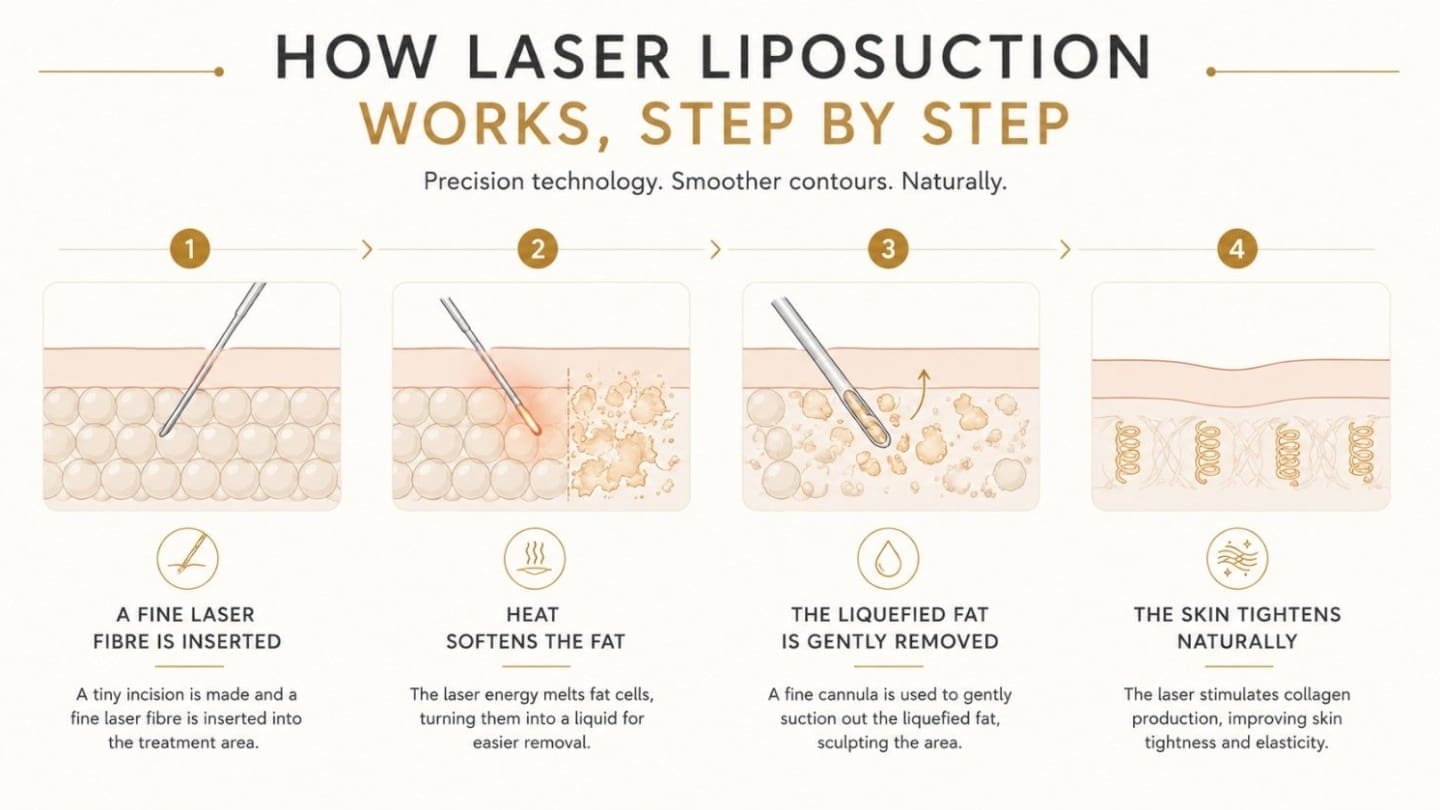
This is genuinely one of the better-studied questions in aesthetic surgery, and the findings are consistent and reassuring.
A systematic review published in Aesthetic Plastic Surgery compared complication rates between laser-assisted liposuction and traditional liposuction across the existing published literature. The findings were notable: laser-assisted liposuction showed the lowest overall complication rates of any technique studied, with rates for bleeding, infection, fluid build-up, thermal injury, and skin damage all sitting at a very low 0.13%. In plain terms, out of every technique compared, the laser-assisted approach came out on top for safety, not just comparable to traditional methods, but meaningfully better across almost every complication measured.
Read the full study here →
A separate, widely cited review published in the Journal of Drugs in Dermatology looked specifically at the safety record of liposuction performed under local anaesthesia, which includes many laser-assisted procedures, across data covering more than 100,000 treated body areas. The review found no cases of the serious complications sometimes associated with liposuction under general anaesthesia, including blood clots, organ perforation, or fatal reactions. The researchers concluded that this more modern, tumescent, locally anaesthetised approach carries a genuinely excellent safety profile compared with older, more invasive surgical liposuction performed under general anaesthesia.
Read the full study here →
Taken together, this research supports a clear and reassuring conclusion. Laser liposuction, particularly when performed under local anaesthesia rather than a general anaesthetic, is one of the safer approaches to fat removal available today.