
Tear Trough Filler vs Lower Blepharoplasty

Dr Hasaneen Al Janabi MBBS MRCS (ENT) - Dr Hass Clinic Founder & Medical Director

Published by Dr Hasaneen

Published date 9.02.26

Under eye ageing can present as hollowness, dark circles, or puffiness that makes the face look tired even when you feel well.

Two of the most commonly discussed solutions are tear trough filler and lower blepharoplasty surgery. While both target the same general area, they are fundamentally different treatments with different goals, recovery times, and suitability.

This guide explains the differences between tear trough filler and lower blepharoplasty, who each treatment suits best, and how to decide which approach is appropriate for your specific anatomy.
What Is Tear Trough Filler?

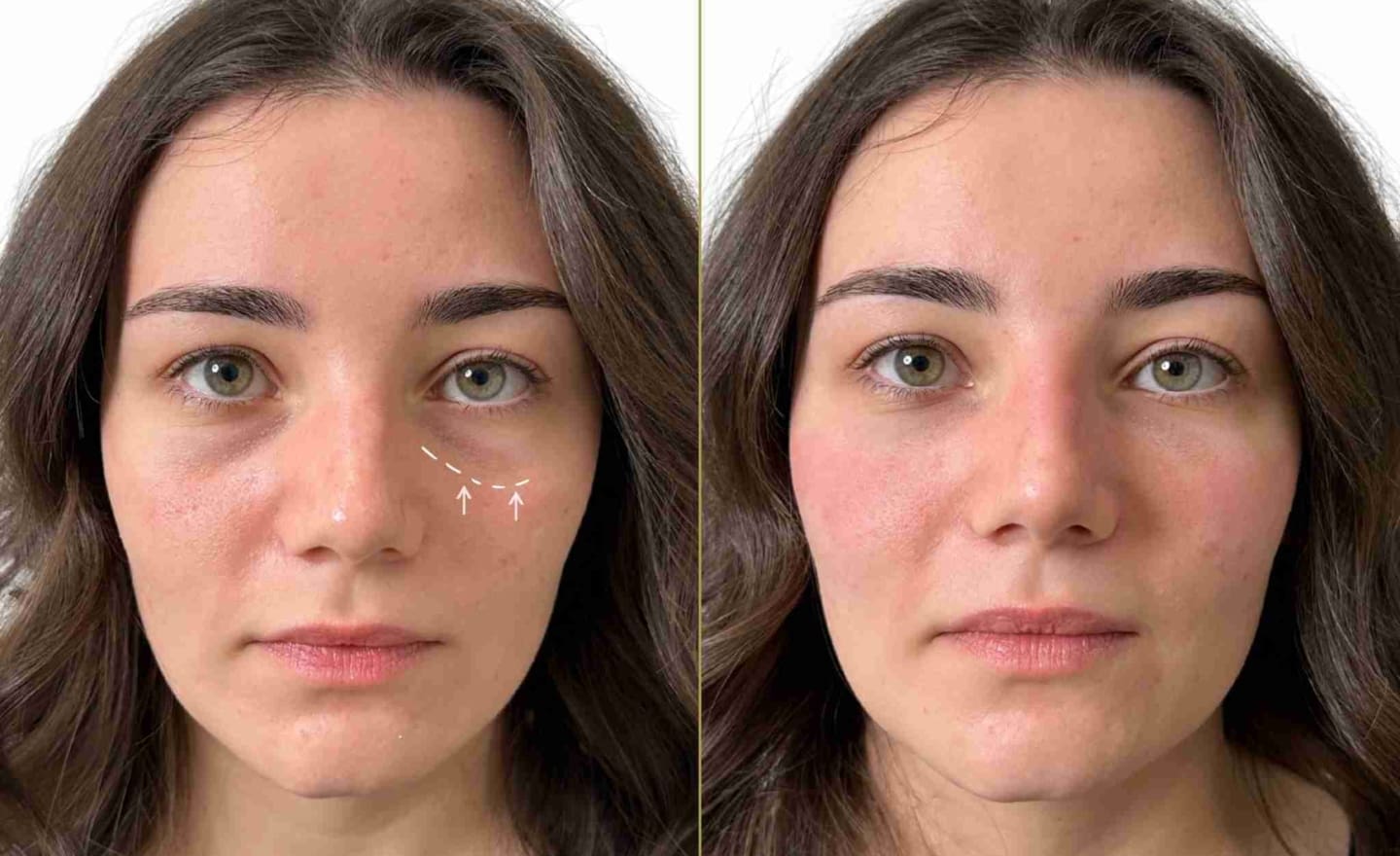
Tear trough filler is a non surgical injectable treatment using typically hyaluronic acid dermal filler to restore lost volume beneath the eyes. The aim is to:

  • Reduce hollowing and shadowing
  • Improve the appearance of dark circles caused by volume loss
  • Create a smoother transition between lower eyelid and cheek

The treatment usually takes under 30 minutes. Results are visible quickly, with mild swelling or bruising possible for a few days. Most patients return to normal activity immediately.

What Is Lower Blepharoplasty?

Lower blepharoplasty is a surgical procedure designed to remove or reposition fat deposits, excess skin, or lax muscle beneath the eyes. It is generally considered when structural ageing is more advanced.

This procedure may involve:

  • Fat removal or redistribution
  • Skin tightening
  • Muscle repositioning

Recovery typically involves swelling and bruising for several weeks, and final results can take months to fully settle.

Understanding the Cause Before Choosing Treatment

Not all under eye concerns are the same. Correct diagnosis is essential because dark circles, eye bags, and hollowing often overlap but have different underlying causes.

  • Volume loss often responds well to tear trough filler.
  • Fat protrusion or significant excess skin may require surgical correction.
  • Pigmentation issues sometimes need skincare or energy based treatments rather than structural procedures.

A careful facial assessment prevents overtreatment and avoids unnatural outcomes.

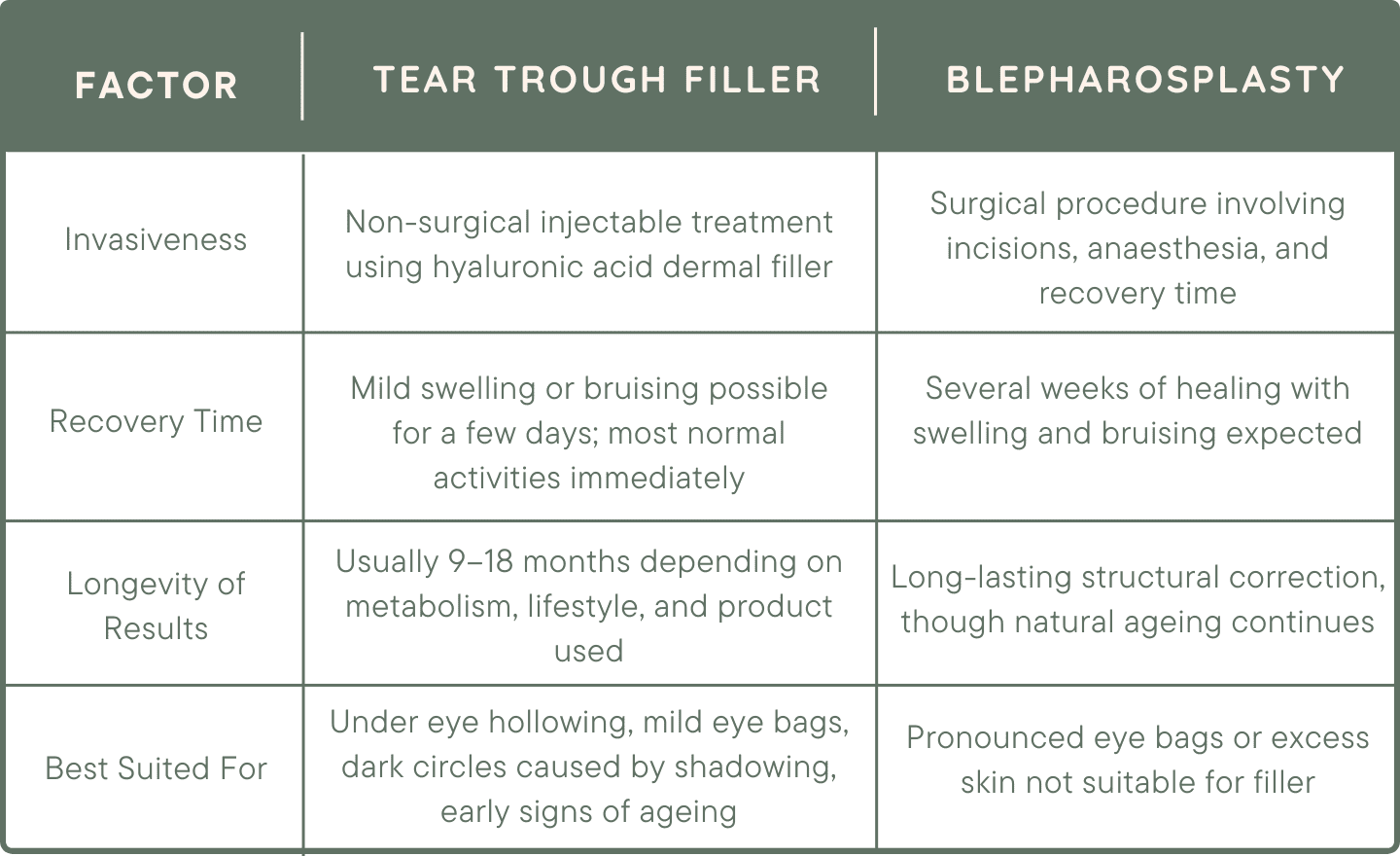
Tear Trough Filler vs Lower Blepharoplasty: Key Differences

Table explaining differences between Tear Trough Filler vs Blepharoplasty

Advantages of Tear Trough Filler

For the right patient, tear trough filler offers several meaningful benefits:

  • No surgery or general anaesthetic
  • Minimal downtime
  • Immediate improvement in tired appearance
  • Reversible treatment if adjustment is needed

At Dr Hass Clinic, we focus specifically on advanced tear trough filler techniques because careful product choice, placement depth, and conservative dosing are essential in this delicate area.

When Surgery May Be More Appropriate

Although filler is highly effective for many patients, surgery may be recommended when:

  • There is significant fat herniation causing prominent eye bags
  • Loose or excess eyelid skin is present
  • Muscle laxity contributes to persistent puffiness

In these situations, filler alone may camouflage rather than correct the underlying structural issue.

Risks and Considerations

Both treatments require expertise, but their risk profiles differ.

Tear trough filler risks include:

  • Bruising or swelling
  • Contour irregularities if poorly placed
  • Rare vascular complications

Blepharoplasty risks include:

  • Surgical complications such as infection or scarring
  • Longer recovery time
  • Potential need for revision surgery

Careful patient selection significantly reduces complications for either approach.

Why Injector Skill Matters Especially With Filler

The under eye area has thin skin, complex vascular anatomy, and little margin for error. Tear trough filler requires precise placement and a conservative philosophy.

When performed appropriately, it can brighten the eyes and restore a rested appearance. Poor technique, however, can worsen puffiness or create visible irregularities. This is why we emphasise advanced anatomical knowledge and cautious treatment planning in our clinical approach.

How to Decide Which Treatment Is Right

The decision between tear trough filler and lower blepharoplasty depends on:

  • Your anatomy and ageing pattern
  • The presence of hollowing versus true fat bags
  • Downtime tolerance
  • Desired longevity of results

A thorough consultation with an experienced practitioner ensures realistic expectations and an appropriate treatment plan.

lip filler consultation

Final Thoughts

Tear trough filler and lower blepharoplasty are not competing treatments but complementary options suited to different anatomical concerns. Many patients benefit from non surgical correction, while others require surgical intervention for more advanced ageing.

Understanding the distinction helps you make an informed choice and achieve a natural, refreshed under eye appearance without unnecessary treatment.

Latest News

What Our Clients Say

Our clients’ satisfaction is at the heart of everything we do. We take immense pride in helping individuals enhance their natural beauty and boost their confidence. But don’t just take our word for it—here’s what some of our valued clients have to say.

Dr Hass Surgeon-led Aesthetic Clinic Mayfair Waiting Area Dr Hass Clinic - Luxury Aesthetic Clinic Mayfair

Our Clinic

Your Sanctuary

Welcome to our clinic, where innovation, expertise, and personalised care merge to redefine your natural beauty. We specialise in providing a wide range of non-invasive treatments that deliver remarkable results without the need for surgery.