
Dark Circles vs Eye Bags: Understanding the Difference

Dr Hasaneen Al Janabi MBBS MRCS (ENT) - Dr Hass Clinic Founder & Medical Director

Published by Dr Hasaneen

Published date 4.02.26

Dark circles and eye bags are two of the most common concerns affecting the under eye area. Both can create a tired, aged appearance, and because they sit so close together, they are often assumed to be the same issue.

In reality, they are distinct conditions with different causes, behaviours, and treatments. Understanding the difference is essential, as treating the wrong problem often leads to minimal or disappointing results.

This guide explains how dark circles differ from eye bags, why they develop, how to identify which one you have, and which treatments are genuinely effective.

Tired Eyes: Causes, Prevention and Treatments

Why Dark Circles and Eye Bags Are Often Confused

The under eye area is one of the most delicate and complex regions of the face. The skin is thin, blood vessels sit close to the surface, and small anatomical changes can significantly affect appearance.

Dark circles and eye bags are commonly confused because they affect the same anatomical region, they often coexist, and both are associated with fatigue and ageing.

However, the similarity is superficial. Dark circles relate primarily to colour and shadow, while eye bags relate to volume and contour. Recognising this distinction is essential for effective treatment.

Understanding the Anatomy of the Under Eye Area

The under eye region is composed of skin, muscle, fat, connective tissue, and bone. Each layer changes with age, but not at the same rate.

Over time:

  • Skin thins and loses collagen
  • Support structures weaken
  • Facial fat shifts or reduces
  • Bone resorption alters facial shape

These changes explain why under eye concerns vary widely between individuals and why treatment must be tailored rather than standardised.

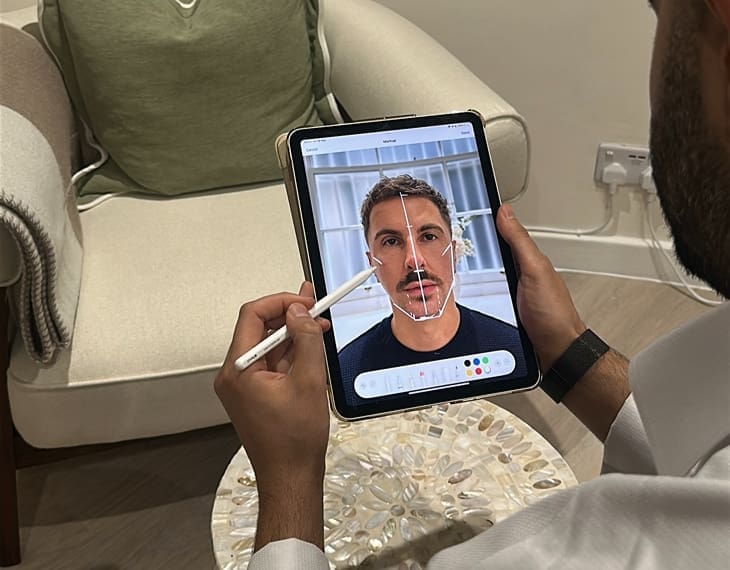
At Dr Hass Clinic, we assess skin thickness, volume, and structural support to determine which treatment will be safest and most effective.

What Are Dark Circles?

Dark circles appear as discolouration or shadowing beneath the eyes, without obvious swelling or puffiness. They may look brown, blue, purple, or grey depending on the underlying cause.

Dark circles are generally grouped into three main types:

Pigmented dark circles: Caused by increased melanin production, worsened by genetics, sun exposure, hormonal changes, or chronic rubbing.

Vascular dark circles: Blue or purple in appearance, caused by thin skin revealing underlying blood vessels. Becomes more noticeable with age as collagen declines.

Structural or shadow-related dark circles: Caused by tear trough hollowing, where volume loss creates shadows, even if skin colour is normal.

Many patients have a combination of these factors, which is why dark circles can be challenging to treat with topical products alone.

Polynucleotides -Under-eye-rejuvination

What Are Eye Bags?

Eye bags are defined by puffiness or protrusion beneath the eyes, creating a visible bulge or contour change.

They are usually caused by:

Fluid-related puffiness: Fluctuates throughout the day, often worse in the morning, linked to diet, allergies, or sinus congestion.

Structural eye bags: Develop when tissue supporting orbital fat weakens, allowing fat pads to protrude. Skin laxity can exaggerate the appearance.

Unlike dark circles, true eye bags caused by fat prolapse do not respond well to creams or lifestyle changes alone.

Mid Face Rejuvenation

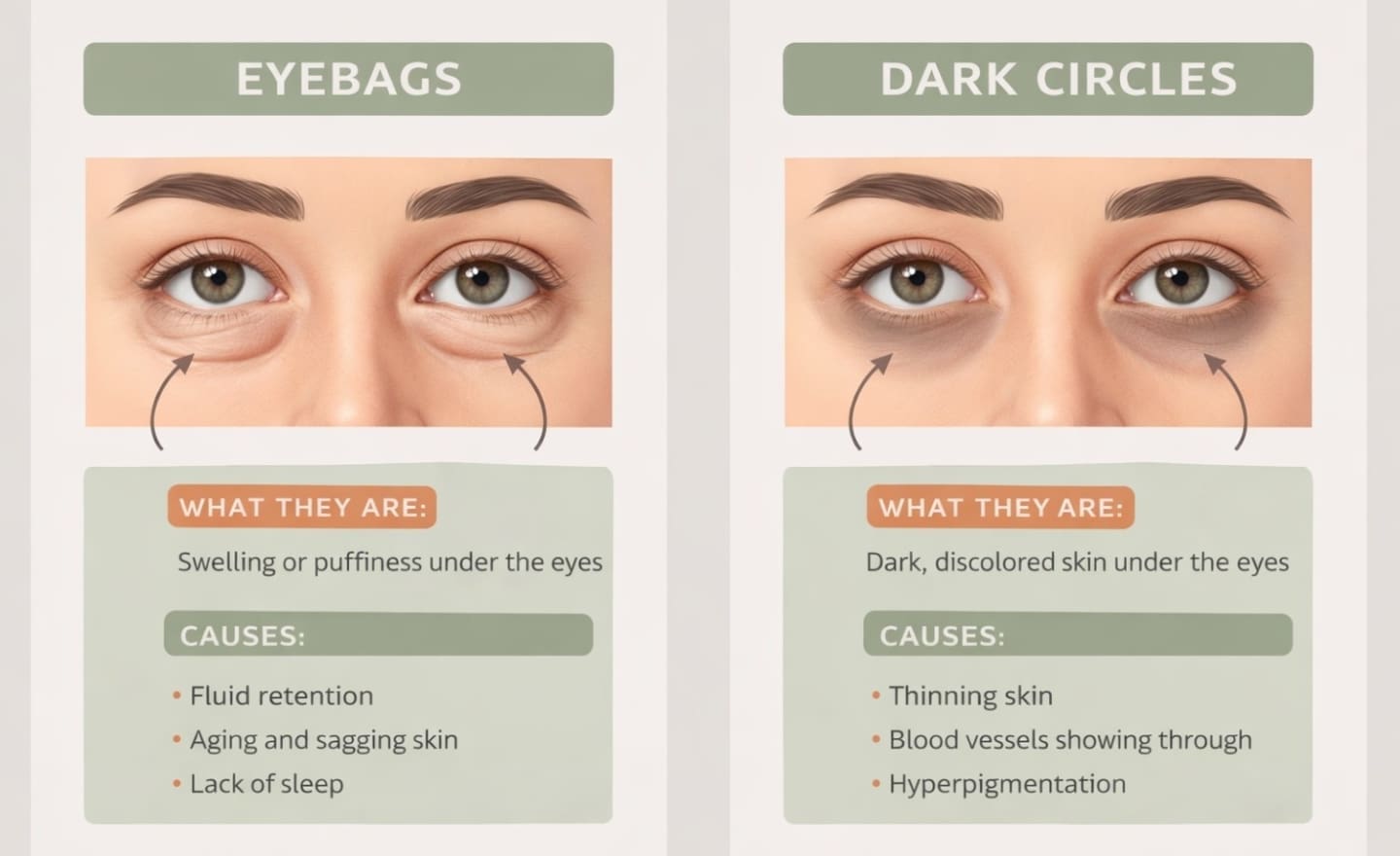
Dark Circles vs Eye Bags: Key Differences

Dark circles

  • Appear as discolouration or shadowing
  • Feel flat to the touch
  • Tend to remain consistent throughout the day
  • Linked to pigmentation, thin skin, or volume loss

Eye bags

  • Appear as puffiness or bulging
  • Have a three-dimensional contour
  • May fluctuate if fluid-related
  • Linked to fluid retention, fat displacement, or tissue laxity

Many patients experience both conditions simultaneously, which requires a combined treatment strategy.

Infographic describing differences between Eye Bags and Dark Circles

Causes of Dark Circles

Dark circles commonly result from a combination of factors rather than a single cause:

  • Genetics: Thinner under eye skin or propensity to pigmentation
  • Ageing: Loss of collagen makes blood vessels more visible
  • Sun exposure: Increases melanin production
  • Volume loss: Midface or tear trough hollowing creates shadows
  • Lifestyle factors: Fatigue and chronic eye rubbing can exacerbate appearance

Causes of Eye Bags

Eye bags are usually linked to structural and fluid-related changes:

  • Ageing: Weakening of supporting tissues allows fat pads to protrude
  • Fluid retention: High salt intake, hormonal changes, or allergies can increase puffiness
  • Skin laxity: Loss of collagen and elastin contributes to sagging under the eyes
  • Other factors: Sinus congestion or nasal issues can worsen swelling

Unlike dark circles, eye bags tend to become more pronounced with age.

Treatment Options: What Actually Works

Effective treatment depends entirely on accurate diagnosis. Treating pigmentation like puffiness, or vice versa, rarely produces meaningful results.

Treating Dark Circles

Dark circles can be caused by pigmentation, vascular visibility, or structural hollowing. Evidence-based treatments include:

Tear trough filler: Hyaluronic acid filler restores volume in the under eye hollow, smoothing shadows. At Dr Hass Clinic, we use precise, conservative techniques to ensure natural results and minimise risk.

Medical-grade skincare: Topical treatments with vitamin C, retinol, peptides, and hyaluronic acid support collagen production, improve skin thickness, and lighten pigmentation.

Polynucleotide injections or microneedling: Stimulate tissue regeneration, improve skin elasticity, and reduce discolouration.

Blepharoplasty: Surgical intervention may be indicated for sagging skin that contributes to shadowing, particularly when hollowing and laxity coexist.

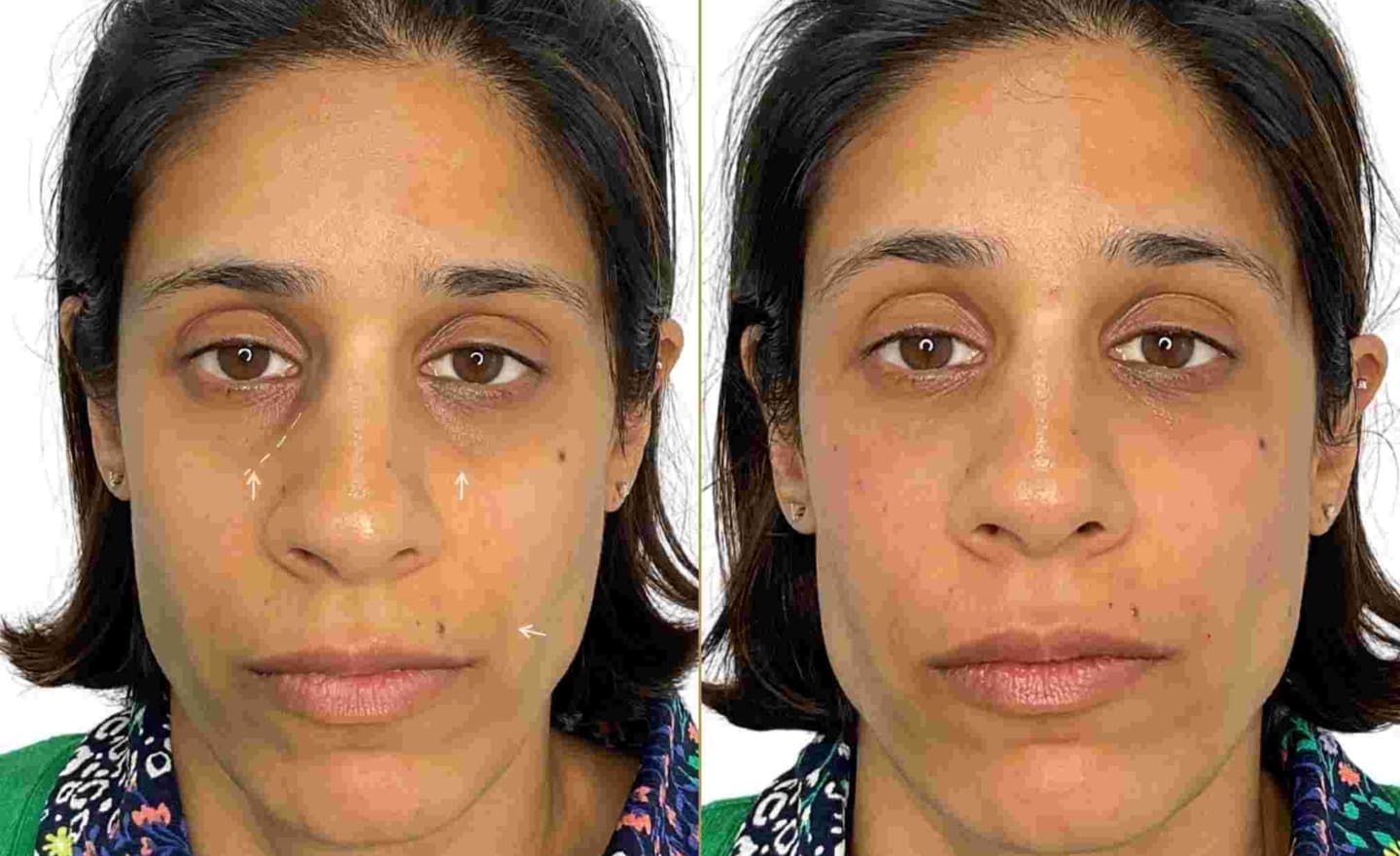
Below is an example of tear trough filler as a treatment for dark circles at Dr Hass Clinic.

Treating Eye Bags

Eye bags involve puffiness or protrusion and can be addressed with a combination of non-surgical interventions, depending on severity:

Tear trough filler: Camouflages mild eye bags by smoothing the transition between the lower eyelid and cheek. Careful assessment is crucial.

Cheek filler: Restoring midface volume can lift the under eye area, reducing the appearance of eye bags and improving overall facial harmony.

Energy-based treatments (e.g., Endolift): Non-invasive devices tighten skin, stimulate collagen, and improve tissue tone, helping reduce puffiness from skin laxity.

Important: While non-surgical treatments can significantly improve appearance, structural eye bags caused by fat prolapse may still require surgery (blepharoplasty) for a definitive result.

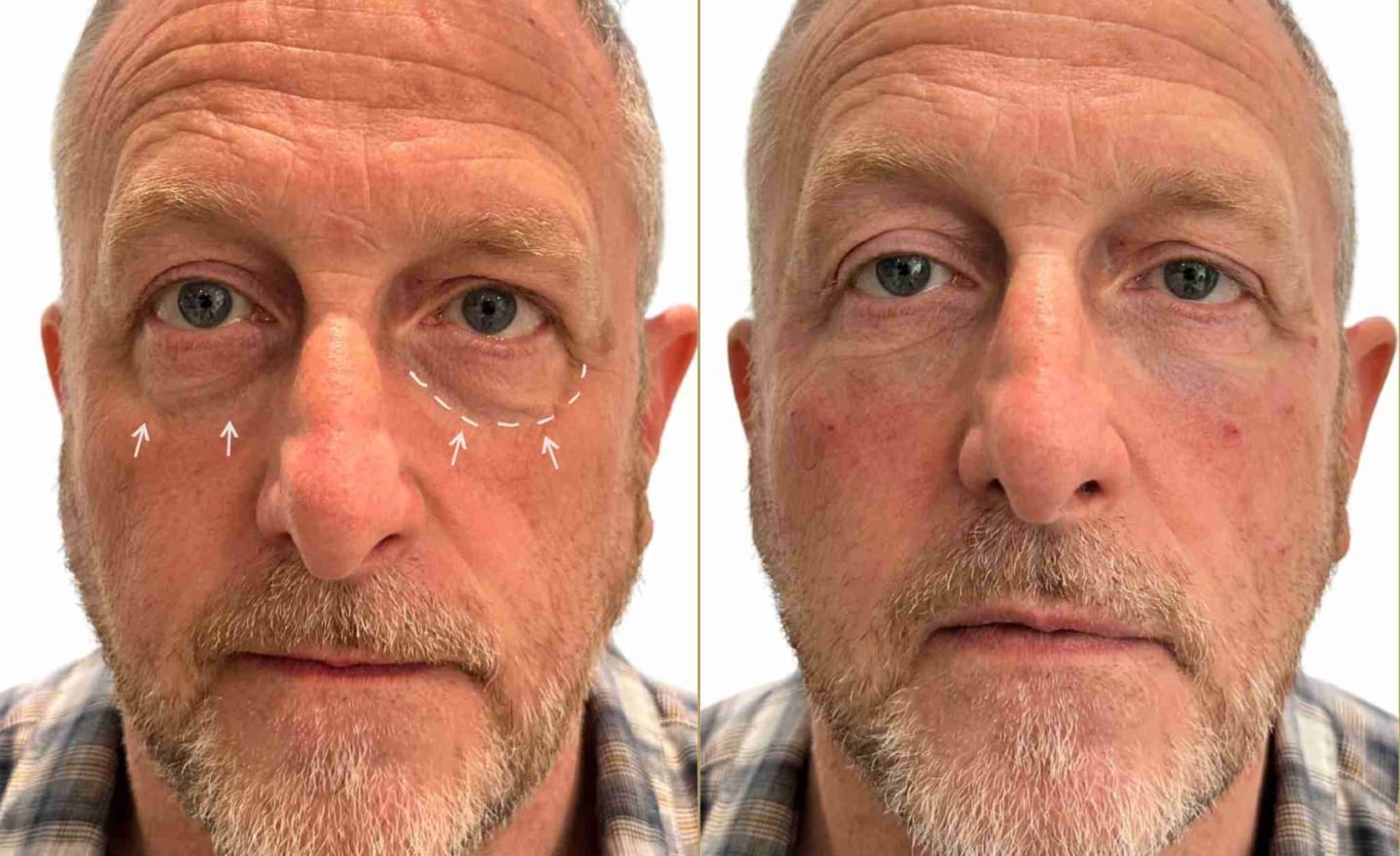
Below is an example of tear trough filler as a treatment for eye bags at Dr Hass Clinic.

Prevention and Long-Term Eye Area Care

While ageing and genetics cannot be reversed, progression can often be slowed and the appearance maintained with a combination of lifestyle, skincare, and targeted non-invasive strategies:

  • Sun protection: The under eye skin is extremely thin and vulnerable. Broad-spectrum sunscreen or protective eye cream prevents UV-induced collagen loss and pigmentation.
  • Skin quality maintenance: Antioxidants, peptides, hyaluronic acid, and collagen-boosting serums maintain elasticity and thickness, making dark circles and shadows less noticeable.
  • Lifestyle management: Adequate sleep, hydration, low salt intake, and allergy control reduce fluid retention and vascular congestion. Avoid chronic eye rubbing to protect delicate skin.
  • Early intervention: Subtle volume loss or pigmentation changes can be addressed early with tear trough filler, skin boosters, or topical treatments before more invasive approaches are needed.
  • Professional assessment: Periodic evaluation allows personalised, evidence-based strategies as ageing progresses, ensuring long-term under eye health and appearance.

Read our full guide on Tear Trough Filler Aftercare.

Final Thoughts

Although they may appear similar, dark circles and eye bags are fundamentally different conditions. Each requires a targeted approach based on anatomy, skin quality, and facial ageing patterns.

At Dr Hass Clinic, we assess under eye concerns holistically, combining anatomical evaluation with patient goals to create safe, realistic, and long-lasting results. Correct diagnosis is the foundation of effective treatment, whether addressing pigmentation, volume loss, or puffiness.

If you are unsure whether your concern is dark circles, eye bags, or a combination, a professional assessment is the most reliable first step.

Latest News

What Our Clients Say

Our clients’ satisfaction is at the heart of everything we do. We take immense pride in helping individuals enhance their natural beauty and boost their confidence. But don’t just take our word for it—here’s what some of our valued clients have to say.

Dr Hass Surgeon-led Aesthetic Clinic Mayfair Waiting Area Dr Hass Clinic - Luxury Aesthetic Clinic Mayfair

Our Clinic

Your Sanctuary

Welcome to our clinic, where innovation, expertise, and personalised care merge to redefine your natural beauty. We specialise in providing a wide range of non-invasive treatments that deliver remarkable results without the need for surgery.