Chin Filler vs Chin Implant: Which Is the Better Option for You?

Dr Hasaneen Al Janabi MBBS MRCS (ENT) - Dr Hass Clinic Founder & Medical Director

Published by Dr Hasaneen

Published date 16.03.26

Overview

A well-defined chin can dramatically influence facial balance. When the chin is proportionate to the nose, lips, and jawline, the entire profile tends to look more harmonious.

Today, most people looking to enhance their chin choose between two options: chin filler or a chin implant. Both aim to improve projection and definition, but they work in very different ways.

One is a quick, non-surgical injectable treatment carried out in minutes. The other is a permanent surgical procedure that changes the structure of the chin.

If you are deciding between the two, understanding the differences in cost, longevity, recovery, and results is essential. This guide breaks down everything you need to know about chin filler vs chin implant, helping you determine which option may be right for your goals.

What Is Chin Filler?

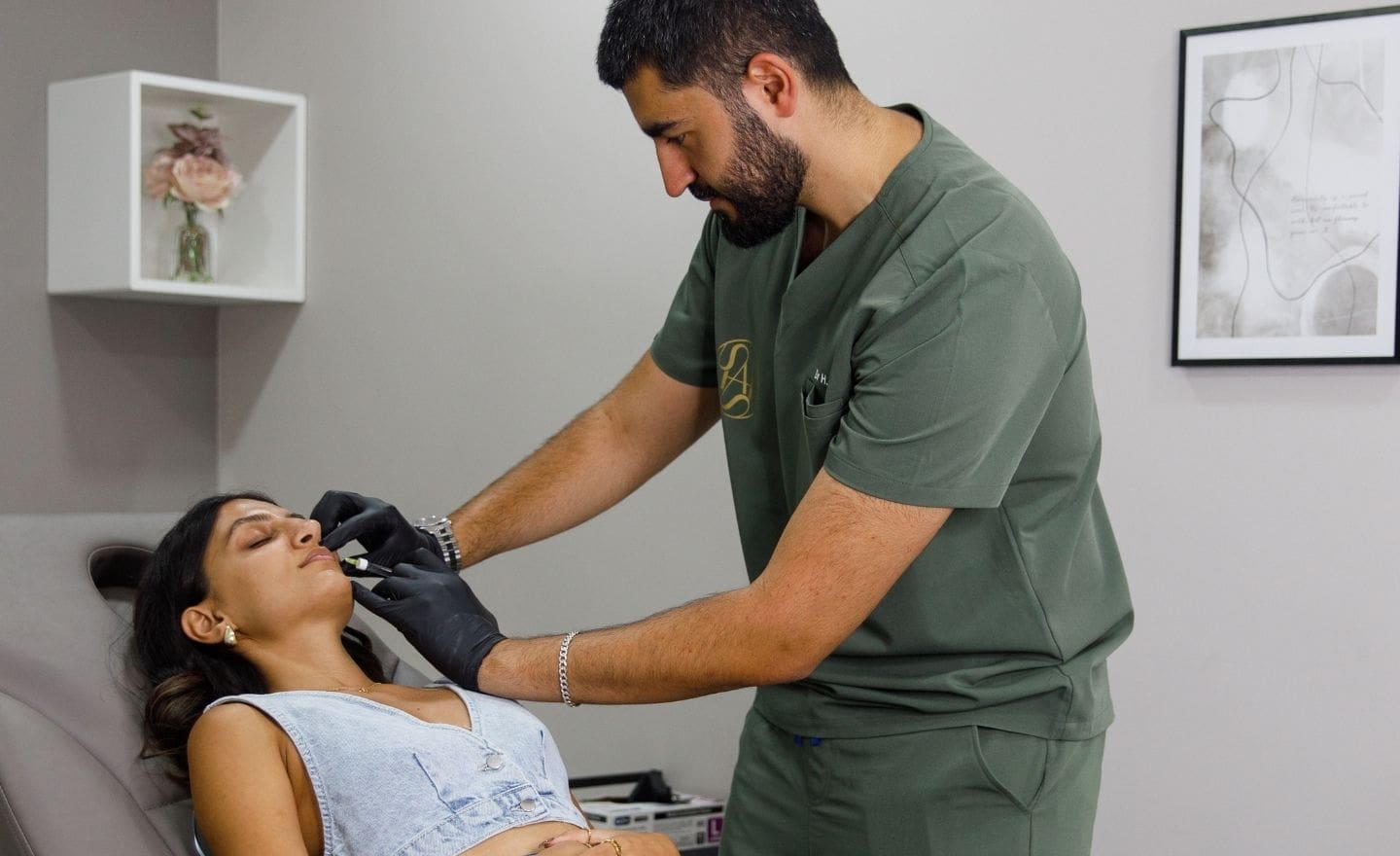
Chin filler is a non-surgical cosmetic treatment that uses injectable dermal fillers to reshape or enhance the chin.

Most treatments use hyaluronic acid fillers, gel-like substances that add volume beneath the skin. By carefully placing filler in targeted areas, practitioners can:

  • Increase chin projection
  • Improve facial balance
  • Strengthen a weak or recessed chin
  • Smooth chin dimples or irregularities
  • Improve the transition between chin and jawline

Treatment usually takes 15–30 minutes and requires little to no downtime. Because the filler gradually breaks down in the body, the results are temporary, typically lasting 12–18 months.

Profile Balancing London - Lower Face rejuvenation

What Is a Chin Implant?

A chin implant is a surgical procedure designed to permanently enhance the size and shape of the chin.

During the procedure, a surgeon inserts a biocompatible implant, usually silicone, over the chin bone to improve projection and contour. The surgery is normally performed under local or general anaesthetic and takes around 1 to 2 hours.

Unlike fillers, implants provide long-term structural change and do not dissolve over time. However, surgery involves a longer recovery period and higher upfront costs.

Chin Filler vs Chin Implant: Key Differences

The core difference between chin filler and chin implants lies in invasiveness, longevity, and how each treatment changes the underlying structure.

Chin Filler vs Chin Implant Table Comparison - Dr Hass Clinic

Before and After Expectations

Understanding what realistic results look like can help you choose between chin filler and a chin implant with confidence.

Chin Filler Results

Before treatment, the chin may appear:

  • Recessed or weak in profile
  • Out of balance with the nose or lips
  • Lacking definition at the jawline

After chin filler, patients often notice:

  • Improved chin projection
  • A smoother transition between lower lip and chin
  • A sharper, more defined jawline appearance
  • Better overall facial symmetry

The improvement is usually subtle yet noticeable, which is one reason fillers are popular with people trying chin enhancement for the first time. Swelling may occur for one to three days, but final results typically appear within one to two weeks.

Chin Filler Before and After Results - Dr Hass Clinic London

Chin Implant Results

Chin implants create more dramatic structural changes.

After recovery, patients typically see:

  • Significantly stronger chin projection
  • A more balanced facial profile from the side
  • A more defined, structured lower face

The recovery process is longer than with fillers. Swelling and tightness may last several weeks, and final results often take around three months to fully settle.

Chin Filler vs Chin Implant Costs (UK)

When comparing chin filler vs chin implant, cost is an important part of treatment planning.

  • Chin filler in the UK usually starts from around £300, with total price influenced by:
    • Amount of filler required
    • Clinic reputation and location
    • Practitioner experience and seniority
  • Many patients need 1–2 syringes, which keeps chin filler relatively accessible compared with surgery.

Chin implant surgery typically costs £2,500–£5,000+ in the UK, reflecting:

  • Surgical facility and hospital fees
  • Anaesthesia costs
  • Surgeon expertise and time
  • Post-operative care and follow-up

While filler has a lower upfront cost, it is temporary and may require repeat treatments over the years, whereas implants provide a one-off permanent structural change.

For independent cost context, you can review typical cosmetic procedure pricing on the NHS Cosmetic Procedures Guide.

Recovery Time Comparison

Chin Filler Recovery

Most chin filler patients experience:

  • Mild swelling or tenderness
  • Occasional small bruises at injection points

These effects usually resolve within a few days, and most people return to work and normal activities immediately or the next day.

Chin Implant Recovery

Chin implant recovery is more involved and typically includes:

  • Swelling and tightness in the chin and lower face
  • Temporary numbness or altered sensation
  • Restrictions on exercise and strenuous activity for 1–2 weeks

Most patients take about a week off work while early swelling settles.

Who Is a Good Candidate for Chin Filler?

Chin filler may be ideal if you:

  • Want subtle enhancement rather than a dramatic transformation
  • Prefer a non-surgical treatment with minimal downtime
  • Want to “test” how a stronger chin might look before surgery
  • Are not ready to commit to a permanent implant

Many practitioners recommend chin filler as a trial run before implants, allowing patients to see how a more projected chin affects overall appearance and facial balance.

Chin Filler

Who Is a Good Candidate for Chin Implants?

Chin implants may be better suited for people who:

  • Have a significantly recessed or under-projected chin
  • Want permanent structural change rather than temporary volume
  • Are comfortable undergoing surgery and recovery
  • Do not want ongoing filler top-ups and maintenance

Implants are commonly recommended when the chin lacks bone projection, rather than simply soft tissue volume.

Expert Insight

Specialists in facial aesthetics consistently emphasise proportion and balance over simply creating a larger chin.

The aim with chin enhancement is not a ‘big chin’, but a chin that restores harmony between the nose, lips, and jawline for a more balanced profile.

— Dr Hasaneen Al Janabi, Surgeon and Medical Director at Dr Hass Clinic

To support this, consultations typically include detailed profile analysis and, where appropriate, digital simulations to help you visualise potential outcomes before choosing between chin filler and chin implant surgery.

Filler Consultation at Dr Hass Clinic

Chin Filler vs Chin Implant: Pros and Cons

Summarising the advantages and limitations of each option can clarify which is likely to suit you best.

Chin Filler: Advantages

  • Non-surgical treatment with no incisions
  • Quick appointments, usually 15–30 minutes
  • Minimal downtime, most people return to normal activities straight away
  • Adjustable and reversible when hyaluronic acid fillers are used

Chin Filler: Limitations

  • Temporary results (around 12–18 months)
  • Maintenance sessions needed to maintain the effect
  • Less suitable for very severe structural deficiency

Chin Implants: Advantages

  • Permanent results once healed
  • Stronger, more noticeable projection and definition
  • One-time procedure, rather than ongoing top-up treatments

Chin Implants: Limitations

  • Surgical risks, including infection or implant movement
  • Longer recovery and more downtime than filler
  • Higher upfront cost compared with non-surgical options

Frequently Asked Questions

Does chin filler look natural?
When performed by an experienced practitioner, chin filler can look very natural. The aim is usually subtle enhancement in projection and facial balance, rather than obvious volume.

Can chin filler replace a chin implant?
In some cases, yes. Mild to moderate chin recession can often be improved with filler alone. More severe structural deficiency, particularly involving the bone, may still require an implant for optimal results.

How long does chin filler last?
Most chin fillers last 12–18 months, depending on your metabolism, lifestyle, and the specific product used.

Is chin implant surgery painful?
Chin implant surgery is performed under anaesthesia, so you should not feel pain during the procedure. Mild discomfort, pressure, and swelling are common in the days following surgery and are usually managed with pain relief.

Final Thoughts: Chin Filler or Chin Implant?

Both chin filler and chin implants can significantly improve facial balance and jawline definition, but they suit different needs and comfort levels.

Chin filler offers a fast, non-surgical way to enhance the chin with minimal downtime and adjustable results, which makes it a popular starting point for many patients. Chin implants, on the other hand, provide permanent structural enhancement for those seeking a long-term, more pronounced change.

For most people, the best first step is a consultation with an experienced medical practitioner, who can analyse your facial proportions, listen to your goals, and recommend whether chin filler, a chin implant, or a combined approach is most appropriate for your jawline.

Latest News

What Our Clients Say

Our clients’ satisfaction is at the heart of everything we do. We take immense pride in helping individuals enhance their natural beauty and boost their confidence. But don’t just take our word for it—here’s what some of our valued clients have to say.

Dr Hass Surgeon-led Aesthetic Clinic Mayfair Waiting Area Dr Hass Clinic - Luxury Aesthetic Clinic Mayfair

Our Clinic

Your Sanctuary

Welcome to our clinic, where innovation, expertise, and personalised care merge to redefine your natural beauty. We specialise in providing a wide range of non-invasive treatments that deliver remarkable results without the need for surgery.