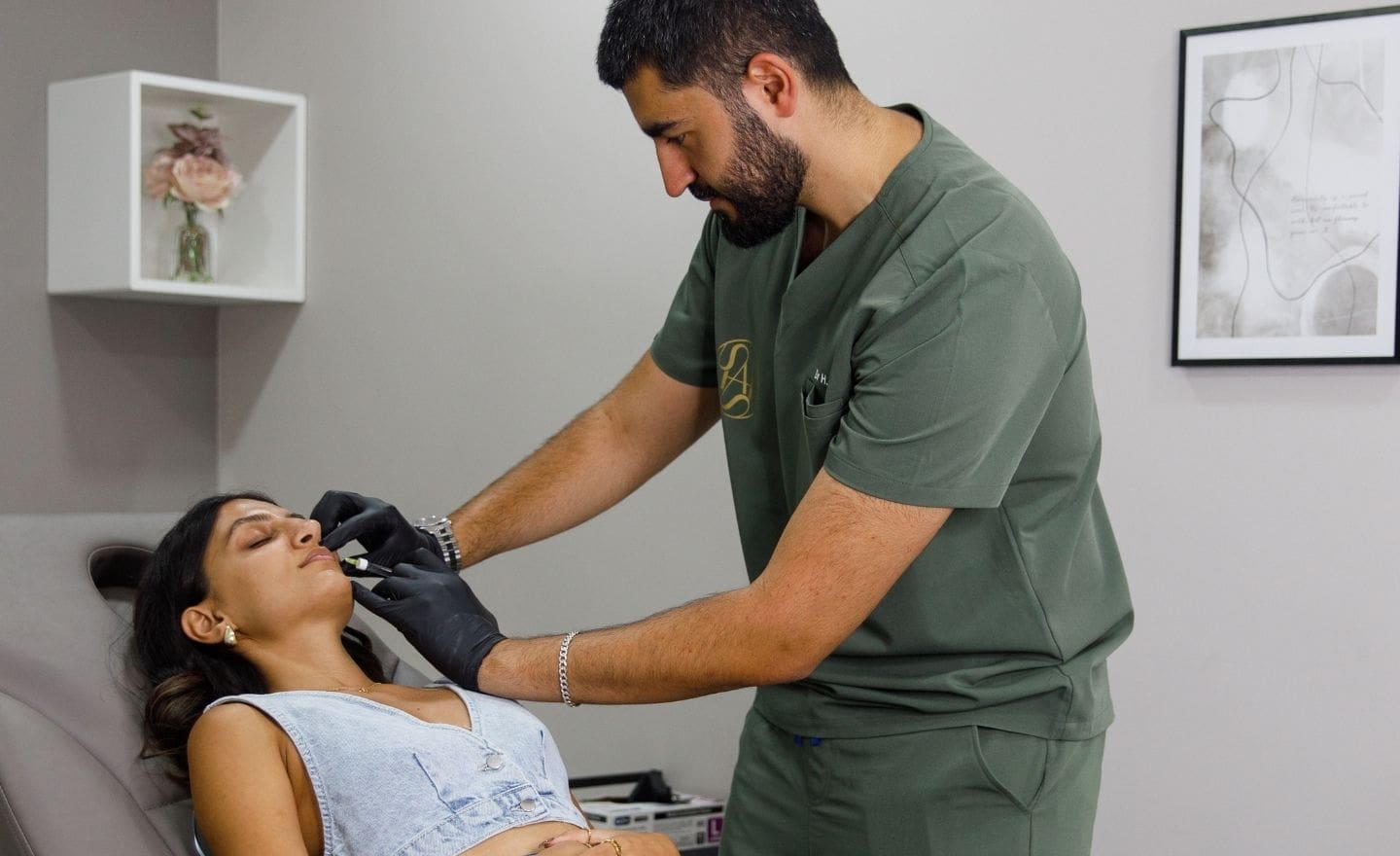
Hyaluronidase has a strong safety profile, but it remains a medical treatment and should be approached with appropriate care.
Most patients experience mild and temporary effects, including swelling, redness, or bruising at the injection site. These are expected and usually resolve within a few days.
A less common consideration is allergic reaction. This is rare in aesthetic practice. A national survey of plastic surgeons found that routine allergy testing is not consistently performed, reflecting the relatively low incidence of significant reactions in clinical use.
It is also important to understand that hyaluronidase breaks down all hyaluronic acid in the treated area, not only the filler. This can lead to temporary volume loss immediately after treatment. In most cases, the skin gradually restores its hydration as natural hyaluronic acid is regenerated.
Results can vary depending on the type of filler used. Some products are more resistant to breakdown and may require more than one session to achieve a controlled and natural result.
In clinical practice, the most important variable is not the product itself, but how it is used. Accurate diagnosis, appropriate dosing, and anatomical precision are key to achieving safe outcomes.